
If you have ever noticed rough, sand-like material collecting in your gutter or around your downspouts after a rainstorm, you were likely looking at shingle granules. Most homeowners do not think much of it at first. But that small detail can tell you a lot about the current condition and remaining lifespan of your roof.
Understanding granule loss early can save you from much bigger problems down the road.
What Are Shingle Granules and Why Do They Matter?
Asphalt shingle roofs are covered in tiny granules made from crushed stone or mineral materials.
These granules are pressed into the surface of the bitumen layer during roof installation and serve a very specific purpose.
Granules protect the underlying asphalt layer (bitumen) from UV rays, helping to slow deterioration caused by direct sun exposure. They also add a layer of physical durability that helps the roof shingle handle rain, hail, wind, and other weather events. Without them, the asphalt beneath becomes vulnerable.
Think of shingle granules as the first line of defense on your asphalt shingle roof. When that layer starts to wear away, the entire roofing system becomes less effective at doing its job.
What Causes Granule Loss?
There are several causes of granule loss, and not all of them signal an emergency. Here is a breakdown of the most common ones.
Normal Wear and Tear Over Time
Every asphalt shingle roof sheds a small number of granules throughout its life. This is completely normal. Older roofs naturally experience more granule shedding as the adhesive holding the granules weakens with age. If your roof is approaching the end of its expected lifespan, finding granules in your gutters is a natural sign of aging.
Newly Installed Roofs
It might seem surprising, but a newly installed roof may shed granules during the first few weeks after installation. Excess granules that were not fully bonded during manufacturing simply work their way loose in early rainstorms. This type of granule loss is typically temporary and not a cause for concern.
Hail and Storm Damage
Hail is one of the more aggressive causes of granule loss. When hailstones strike roof shingles, they dislodge granules and can create bald spots across the surface. High winds during storms can also loosen granules, especially on older roofs where granule adhesion has already started to decline.
After any significant storm, it is worth doing a visual check or scheduling an inspection to assess the extent of granule loss.
UV Exposure and Temperature Swings
The climate in Spokane brings real temperature extremes across the seasons. That kind of weather causes expansion and contraction in roofing materials, which gradually weakens the bond between granules and the asphalt layer underneath. UV protection diminishes as granules become loose, and the cycle accelerates from there.
Poor Installation
If a roof was not installed correctly, it can experience premature granule loss. Poor installation may involve improper nailing, incorrect shingle overlap, or using low-grade materials that do not hold granules as well as high-quality asphalt shingles should. A professional roofer should always follow manufacturer guidelines to preserve the durability of the roofing system.
Signs of Granule Loss You Should Watch For
Knowing what to look for helps you catch problems before they become costly repairs.
- Granules in gutters or downspouts: Finding granules in gutters or collecting near your downspouts is one of the clearest early signs that your roof is shedding.
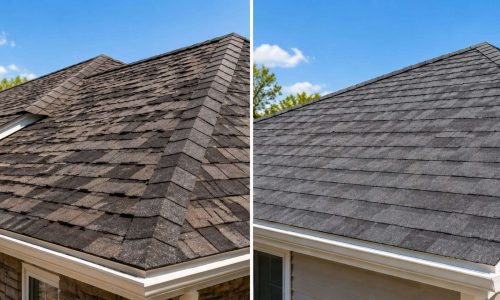
- Bald spots on shingles: Visible bald spots or dark patches on your roof shingles indicate areas where granules have already worn away.
- Missing granules on damaged shingles: After hail or storm damage, missing granules often appear in patterns across the roof surface.
- An increase in granule loss after storms: If you notice excessive debris in your gutters following rain or wind events, that uptick matters.
- Water stains inside your home: When a roof loses its granule layer, it becomes more susceptible to a leak, which can eventually cause water damage inside the home.
Repair or Replace? How to Decide
Not every case of granule loss calls for a full roof replacement. The right answer depends on the extent of granule loss, the age of the roof, and whether the affected shingles can be addressed individually.
If the granule loss is isolated to a few sections, a targeted repair may be sufficient to restore protection. However, you cannot simply glue granules back onto a shingle. Damaged shingles typically need to be replaced entirely, even if only in specific spots.
When granule loss is extensive – covering large portions of the roof or showing signs that the bitumen layer itself is exposed – a new roof is likely the more practical and cost-effective solution. Addressing granule loss at that stage is really about protecting your home from more serious structural problems.
Significant granule loss on an older asphalt roof is often a sign that the materials have simply reached the end of their useful life. At that point, patching becomes a short-term fix that delays the inevitable.
Why Regular Roof Maintenance Matters
Regular roof maintenance helps you monitor granule loss before it becomes a larger issue. A qualified roofer can identify early signs of wear, assess whether architectural shingles or other roofing materials are performing as expected, and help you make an informed decision about repair versus replacement.
Regular roof maintenance also keeps your warranty valid in many cases and can support home insurance claims when storm damage is involved. Roofing professionals can document the condition of your roof in a way that makes that process much smoother.
For homeowners in Spokane, where seasonal weather puts consistent stress on exterior surfaces, regular inspections are especially important. If you suspect your roof is losing granules faster than it should, call a roofing professional before the problem escalates.
Conclusion
Granule loss on a roof is one of those issues that is easy to overlook but important not to ignore.
Whether it is normal wear, storm damage, or excessive granule shedding from a failing asphalt shingle, catching the problem early makes all the difference. Balsamroot Exteriors offers expert roofing services in Spokane and can help you determine whether repair or replace is the right move. Reach out at 509-295-2326 to get started.