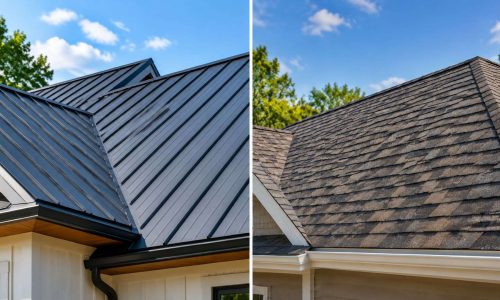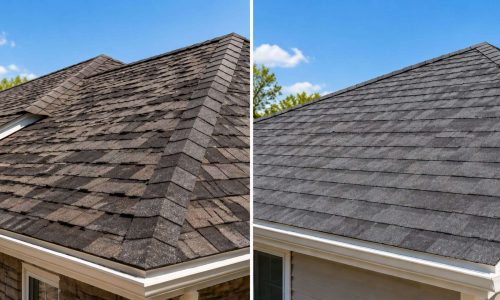
If you’re replacing your roof and you’ve started doing your homework, you’ve probably already hit the big question: should you go with a metal roof or stick with asphalt shingles? It’s one of the most common decisions homeowners face, and it’s not as simple as just picking the cheaper option up front.
Both materials work. Both are widely used in domestic roof construction across the United States. But they perform very differently over time, and depending on your budget, your climate, and how long you plan to stay in your home, the right answer could look completely different from your neighbor’s.
Let’s break this down the way it actually matters.
How Long Does Each of These Roofs Actually Last?
Longevity is usually where this conversation starts – and for good reason. A roof is not a small investment.
Asphalt shingles, the most common roofing material in North America, typically last between 20 and 30 years. The exact lifespan depends on the quality of the shingle, the installation, and how hard your local weather pushes back. Standard three-tab shingles tend to fall toward the lower end of that range. Architectural or dimensional shingles – which are thicker and more durable – can push closer to 30 years under reasonable conditions.
Metal roofing, on the other hand, is in a different league when it comes to longevity. Depending on the material – whether that’s steel, aluminium, zinc, copper, or even a coated alloy – a properly installed metal roof can last anywhere from 40 to 70 years, sometimes longer. That’s not marketing language. That’s what the data and industry sources like the This Old House Reviews Team consistently report.
So yes, one outlasts the other by decades. That’s not an exaggeration.
What Makes Asphalt Shingles So Popular?
Despite the lifespan difference, asphalt shingles dominate the roofing market – and there are real reasons for that.
Cost is the biggest one. Asphalt shingles are significantly less expensive to purchase and install compared to most metal roofing options. For homeowners working with a tight budget or planning to sell within the next 10 to 15 years, the lower upfront cost makes a lot of sense.
Most asphalt shingles today are made with a fiberglass mat core coated in asphalt, then topped with granules that protect against UV exposure and weathering. They’re relatively easy to repair, widely available, and most roofers are trained and equipped to work with them.
There’s also a design familiarity to consider. Asphalt shingles come in hundreds of colors and styles, and they blend naturally into most neighborhoods. For homeowners focused on aesthetics and curb appeal without a dramatic change, they’re a dependable choice.
What Makes Metal Roofing Worth the Higher Price?
The case for metal roofing is really a case for long-term thinking.
Yes, the upfront cost is higher – sometimes significantly so. But when you spread that cost across the full lifespan of the roof, metal often comes out ahead on a per-year basis. You’re also looking at fewer renovations, less frequent replacement, and in many cases, a stronger warranty from the manufacturer.
Metal roofs are also highly efficient when it comes to energy use. Reflective metal surfaces reduce heat absorption, which can lower cooling costs during warmer months. That’s a meaningful benefit for homeowners thinking about the full cost of ownership.
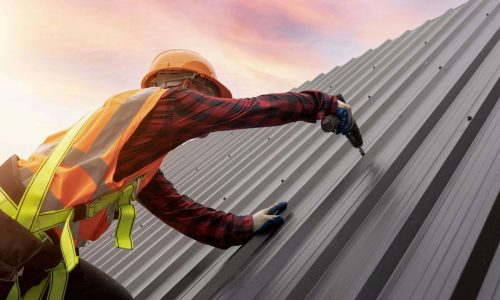
From a weather performance standpoint, metal roofing holds up extremely well. It handles heavy snow loads effectively – snow tends to slide off the surface rather than sit and create ice dam problems. It resists hail damage better than most shingle products, and in high-wind scenarios, properly fastened metal panels can outperform asphalt significantly. The fastener system used in metal installation is designed to hold under serious stress.
How Each Roof Handles the Spokane Climate
Spokane, WA sits in a region that doesn’t go easy on roofs. You get real winters with real snow and ice, summer heat, wind events, and rain that shows up without much warning. Your roof earns its keep here.
Asphalt shingles can hold up fine in this climate, especially when installed correctly and maintained over time. A rejuvenation treatment applied to aging asphalt shingles can extend their life and flexibility – which matters in cold climates where shingles can become brittle. A well-maintained asphalt roof handles Spokane’s conditions without issue, but it does require attention.
Metal roofing is arguably better suited to Spokane’s climate by design. The ability to shed snow naturally, resist ice buildup, and reflect summer heat makes it a strong performer across all four seasons. Steel and aluminium are particularly common choices in this region because they balance durability with reasonable cost. Copper and zinc are available but tend to be more niche, often chosen for their aesthetics as much as their performance.
The Cost Comparison: Upfront vs. Lifetime
Here’s a straightforward look at how these two materials compare financially.
Asphalt Shingles:
- Lower upfront cost per square foot
- Shorter lifespan means potential replacement within the life of your mortgage
- Maintenance and minor repairs add up over time
- Old shingles typically end up in a landfill, since recycling options are limited
Metal Roofing:
- Higher upfront cost, often two to three times more than asphalt
- Longer lifespan means fewer replacements over the life of the home
- Lower long-term maintenance burden
- Often recyclable at the end of its service life
One thing worth noting: a metal roof can also affect your home insurance. Many insurance providers offer discounts for metal roofing because of its resilience against hail, wind, and fire. It’s worth a conversation with your insurance agent before making a final call.
What About Appearance? Can Metal Roofs Look Good?
This used to be a real concern. Early metal roofing had a very industrial look – the kind of thing you’d expect on a barn or a commercial building, not a residential home.
That’s changed considerably. Today’s metal roofing systems are available in standing seam panels, metal shingles that mimic the look of wood shingles or slate, and a wide range of profiles designed specifically for residential homes. The design options have improved enough that a metal roof can look completely at home in a traditional neighborhood.
Some homeowners still prefer the classic look of an asphalt shingle roof, and that’s a legitimate preference. But if you’ve ruled out metal for purely aesthetic reasons, it might be worth taking another look at what’s available today.
Repair, Noise, and Other Practical Considerations
A few things that don’t always make the headline comparison but matter in real life:
Asphalt shingles are easier and cheaper to repair when damage is isolated. If a storm knocks loose a few shingles, a roofer can typically replace just those sections without much disruption or expense.
Metal roofs can be trickier to repair, especially with standing seam systems where panels interlock. Matching the finish or profile on older sections can also be a challenge. That said, the need for repairs tends to be less frequent to begin with.
On the noise question – yes, rain on a metal roof is louder if there’s no insulation or solid decking underneath. With proper installation and underlayment, the difference is minimal. But it’s worth asking about during the planning stage.
FAQs: Metal Roof vs Asphalt Shingles
How much longer does a metal roof last compared to asphalt shingles?
On average, a metal roof lasts 40 to 70 years, while asphalt shingles typically last 20 to 30 years. That can mean one or two additional roof replacements over the life of a home.
Is a metal roof worth the extra cost?
For homeowners planning to stay in their home long-term, the math often works in favor of metal when you factor in replacement cycles, energy savings, and potential insurance discounts.
Can I put a metal roof over existing asphalt shingles?
In some cases, yes – but it’s not always recommended. A proper inspection of the decking and structure is important before making that call.
Do metal roofs hold up against hail?
Most metal roofing materials perform well against hail, especially steel and aluminium panels. Some products carry specific impact resistance ratings, which can also affect home insurance premiums.
What is the most common type of metal used in residential roofing?
Steel is the most widely used metal in residential roofing across the United States. Aluminium is a close second, especially in coastal areas, though it’s used in Spokane as well. Copper and zinc are less common but valued for their longevity and appearance.
Choosing the Right Roof for Long-Term Value
Choosing between a metal roof and asphalt shingles comes down to how you weigh upfront cost against long-term value. Asphalt shingles are proven, affordable, and practical for many homeowners. Metal roofing costs more to start but often pays for itself over time through durability, lower maintenance, and energy savings.
If you’re ready to talk through what makes sense for your home, reach out to the team at Balsamroot Exteriors to get honest guidance and a straight answer based on your specific situation.