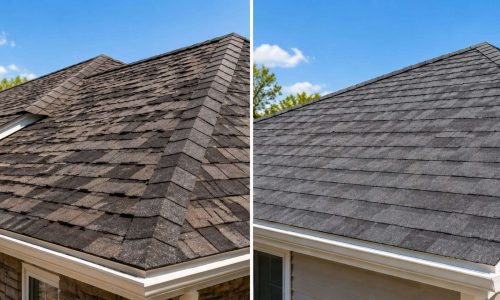
If you’ve ever stood in a roofing aisle or sat across from a contractor trying to make sense of your options, you know how quickly the details blur together. Two names keep coming up: architectural shingles and 3-tab shingles. They both go on a roof. They both look like shingles. So what’s actually different?
Quite a bit, it turns out – especially when you’re thinking long term.
This article breaks down the lifespan comparison between architectural shingles and 3-tab shingles, explains why that gap matters, and helps you figure out which option makes more sense for your home. If you’re in Spokane, WA, where winters can be punishing and summer heat isn’t exactly gentle, the choice carries real weight.
What Are 3 Tab Shingles?
The name comes from the way the shingles are cut. Each strip has three evenly spaced tabs, which gives the finished roof a flat, uniform look. They’ve been the standard option for decades, and for good reason – they’re affordable and relatively straightforward to install.
But that simplicity comes with trade-offs. A 3-tab shingle is a single layer of asphalt material. What you see is essentially the whole shingle, which means there’s less mass to resist wind, impact, and temperature swings.
Most 3-tab shingles carry a manufacturer warranty of around 20 to 25 years. In practice, many roofs in harsher climates need attention well before that window closes.
What Are Architectural Shingles?
Architectural shingles – sometimes called dimensional or laminate shingles – are constructed from multiple layers of asphalt material bonded together. That layering creates a textured, three-dimensional appearance that mimics wood shake or slate, and it also adds structural thickness.
Because of that extra mass, architectural shingles handle stress differently than their 3-tab counterparts. They flex less dramatically under temperature changes, they hold up better against wind uplift, and they distribute impact from hail and debris more effectively.
Warranties on architectural shingles typically run from 30 years on the lower end up to 50 years or lifetime coverage for premium products. The gap between these two products isn’t just cosmetic.
Architectural Shingles vs 3 Tab: The Lifespan Difference Explained
Here’s where the comparison gets concrete. When homeowners ask about architectural shingles vs 3-tab, lifespan is almost always the deciding factor once they understand what’s really being compared.
Layer Count Changes Everything
A 3-tab shingle is a single-ply product. Architectural shingles use a laminated construction, typically two or more layers fused together. That difference in thickness – we’re talking about shingles that can be 50 percent heavier than 3-tab- translates directly into durability.
A thicker shingle wears more slowly. It takes longer for UV exposure to degrade the surface, longer for granule loss to become a problem, and longer before the underlying asphalt starts to crack or curl.
Wind Resistance Is Not a Small Detail
Wind ratings matter a great deal in Spokane, where seasonal storms roll through with real force. Standard 3-tab shingles are typically rated for winds up to 60 mph. Architectural shingles are commonly rated for 110 mph or higher, and premium lines can push that even further.
When a shingle lifts during a windstorm, it creates an entry point for water. That single failure can compress years off a roof’s functional lifespan, not because the shingles failed everywhere, but because moisture got underneath and started working its way through the decking.
Temperature Cycling Takes a Toll
Spokane’s climate involves real temperature swings – hot, dry summers and cold winters with freeze-thaw cycles that test exterior materials. Every time a shingle heats up during the day and cools down at night, the material expands and contracts slightly.
Over years of cycling, thinner materials develop micro-cracks first. Architectural shingles, with their laminated layers and greater mass, handle that stress more gracefully. They don’t eliminate the effect of temperature cycling, but they absorb it better.
Granule Retention Over Time
The granules embedded in the surface of asphalt shingles do two things: they protect the underlying asphalt from UV degradation, and they contribute to fire resistance ratings. As granules shed – which they all do eventually – the shingle becomes more vulnerable.
Architectural shingles tend to retain granules longer because of how the surface layer is constructed and bonded. You’ll typically notice significant granule loss in aging 3-tab shingles before architectural shingles of the same age show similar wear.
Real Numbers: How Long Does Each Type Actually Last?
Manufacturer warranties give you one number, but real-world performance in a climate like Spokane’s can tell a different story. Here’s a reasonable range based on typical conditions:
- 3-tab shingles: 15 to 20 years of reliable performance in challenging climates, even if the warranty says 25
- Architectural shingles (standard): 25 to 30 years of solid performance
- Architectural shingles (premium or designer): 30 to 40-plus years with proper maintenance and ventilation
That’s not a small gap. If you’re planning to stay in your home for another 20 years, the roof you put on today with 3-tab shingles may need to come off and be replaced while you’re still living there. With architectural shingles, you’re much more likely to put the roof on once and not revisit it until you’re ready to sell or significantly renovate.
Does a Longer Lifespan Justify the Higher Cost?
This is the question most homeowners get stuck on. Architectural shingles cost more upfront – typically 20 to 40 percent more than 3-tab for materials, with some variation based on the specific product line and roof complexity.
But here’s the way to think about it: roofing costs are not just about materials. They include labor, decking inspection, disposal of old shingles, flashing work, and the disruption of having a crew on your property for days. When you factor in the full cost of a roof replacement, stretching the years between replacements from 20 to 35-plus has a significant financial impact.
If you replace a 3-tab roof after 20 years and pay $12,000 for that job, and then an architectural roof 15 years later costs $14,500, you’ve spent $26,500 across 35 years. An architectural roof installed today for $16,000 that lasts 35 years comes out ahead – and skips an entire disruption cycle.
What About Warranty Coverage?
Warranties on roofing products are worth reading carefully because they don’t all protect the same things. Most manufacturer warranties cover manufacturing defects, not installation errors or damage from weather events.
Architectural shingle warranties from major manufacturers often include coverage for algae resistance, wind damage up to rated speeds, and granule loss beyond expected levels. Some include transferability if you sell your home, which can be a selling point.
3 tab warranties tend to be shorter and sometimes exclude wind damage below a certain speed threshold. It’s worth comparing the fine print side by side before assuming a “25-year warranty” means the same thing across products.
Does Roof Ventilation Affect Shingle Lifespan?
Yes, significantly. This is one detail that gets overlooked in product comparisons. Even the best architectural shingle on the market will underperform if the attic ventilation underneath it is inadequate.
Poor ventilation traps heat in the attic during summer, which accelerates shingle degradation from below. In winter, it can contribute to ice damming, where heat escapes unevenly, melts snow on the roof, and refreezes at the eaves – creating water backup that works its way under shingles.
A proper roofing replacement addresses ventilation as part of the project, not as an afterthought. This is one of the reasons working with an experienced local contractor matters. Someone familiar with Spokane homes knows what ventilation issues tend to show up in the region’s housing stock and can spot problems before new shingles go on.
Curb Appeal Is Part of the Lifespan Equation Too
It might feel like a soft consideration compared to wind ratings and warranty terms, but curb appeal has real value – especially if you’re thinking about resale.
A roof that looks worn at year 18 affects how buyers perceive the whole home, even if it still has a few functional years left. Architectural shingles maintain their dimensional appearance longer than 3 tab shingles, which tend to look flat and dated as they age.
For a home in Spokane’s competitive real estate market, a roof that still looks solid and attractive adds perceived value. A roof that looks tired raises questions – even if it technically isn’t leaking.
Signs Your Current Roof Is Nearing the End
If you’re trying to decide whether to repair or replace, and you’re not sure what you currently have on your roof, there are some indicators worth looking at.
Curling or cupping at the edges of shingles is a common sign of age-related material breakdown. Missing granules in gutters or at downspout exits suggest the surface layer is wearing through. Visible cracking, brittleness, or shingles that move easily when touched indicate the material has lost its flexibility.
Flashing failures around chimneys, skylights, and roof-to-wall transitions are another sign. These aren’t always shingle issues specifically, but they often accompany an aging roof system.
If your current roof is a 3-tab installation that’s 15 years or older, it’s worth having a qualified contractor take a look before a problem forces the conversation. A roofing replacement handled proactively is almost always less expensive and less stressful than one triggered by active damage.
Why Local Experience Matters in Spokane
Spokane’s climate asks more of roofing materials than many parts of the country. The combination of summer UV exposure, winter freeze-thaw cycles, heavy snowfall in some years, and windstorms puts roofing systems through real stress testing on a seasonal schedule.
A contractor who works regularly in this region understands which product lines hold up well here, how to install for local weather patterns, and what the common failure points look like on Spokane homes. That knowledge isn’t something you pick up from a product brochure – it comes from doing the work here, season after season.
At Balsamroot Exteriors, founder Steven “John” McMullen brings more than a decade of hands-on experience in Eastern Washington. The company was built specifically to serve Spokane homeowners with honest assessments, clear explanations, and work that’s meant to last. The name itself is a nod to the balsamroot flower – a tough, resilient plant native to the region that comes back year after year regardless of harsh conditions.
That’s the standard Balsamroot Exteriors holds its work to.
Frequently Asked Questions
Are architectural shingles worth the extra cost?
For most homeowners, yes. The combination of longer lifespan, better wind resistance, improved appearance, and stronger warranty terms makes architectural shingles a better long-term investment. The upfront cost difference is typically recovered by avoiding one additional replacement cycle.
Can I install architectural shingles over existing 3 tab shingles?
In some cases, yes – one layer of new shingles can sometimes be installed over an existing layer, depending on local code and the condition of the existing roof. However, this approach has limitations and doesn’t address any underlying decking issues. A full removal and replacement typically produces better results and allows for a thorough inspection of the roof deck.
How do I know what kind of shingles are on my roof now?
You can usually tell by looking at the texture and thickness. 3-tab shingles have a flat, uniform appearance with three evenly spaced cutouts. Architectural shingles have a layered, textured look with varying shapes. If you’re not sure, a roofing contractor can identify the product quickly during an inspection.
Do architectural shingles hold up better in hail?
Generally, yes. The added thickness and laminated construction provide more resistance to impact. Some architectural shingles also carry Class 4 impact resistance ratings, the highest available, which may qualify homeowners for insurance discounts. It’s worth asking your contractor which products carry that rating if hail is a concern in your area.
How does attic ventilation affect shingle lifespan?
Poor ventilation shortens shingle life by allowing heat to build up in the attic, which degrades shingles from below. It also increases the risk of ice dams in winter. Proper ventilation is an important part of any roofing project and should be evaluated before new shingles are installed.
Conclusion
When comparing architectural shingles vs. 3-tab, lifespan is where the real difference lies. Architectural shingles last longer, handle Spokane’s climate better, and tend to deliver more value over the full life of the roof. If you’re ready to take the next step, learn more about what a full roofing replacement involves – or contact Balsamroot Exteriors to schedule a straightforward assessment with someone who knows this region and will give you an honest answer.